How to Mix and Use Face Packs: Ubtan, De-tan & Korean
Mixing ratios, liquids to choose, and application tips so face packs help rather than harm your skin.
Mixing & Timing
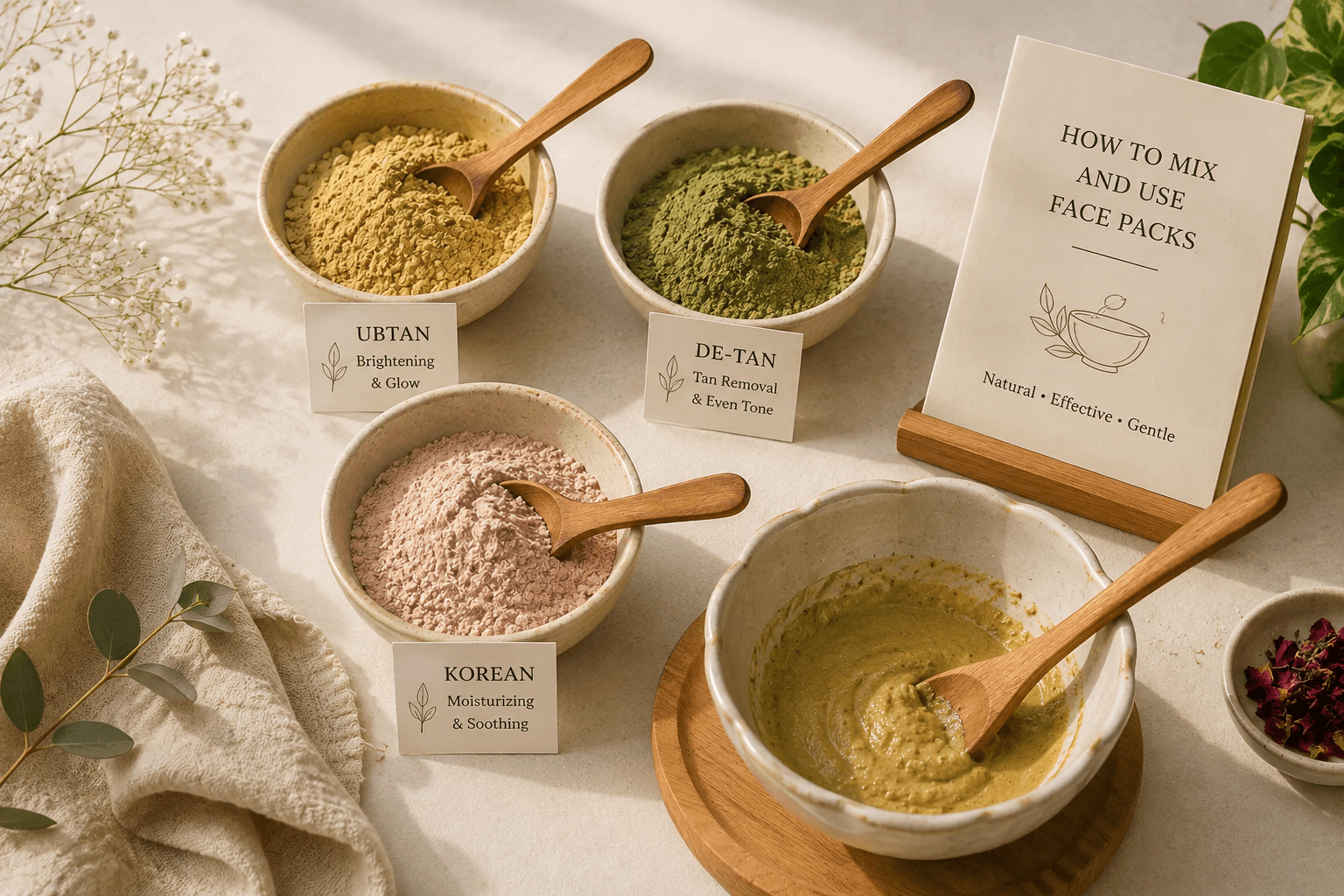
Face packs vary in purpose — some are clarifying clays, some are hydrating cream masks, and some are gentle grain-based blends like ubtan. The single most important choice you will make is the liquid: it controls the pack’s final texture and how it interacts with your skin. Water is neutral, milk or yogurt adds lactic acid and emollience, and aloe soothes and adds slip.
Aim for a yogurt-like consistency when mixing any powder-based pack. Too stiff a paste dries into a tight shell and extracts moisture, which is counterproductive. Apply in a thin, even layer and avoid friction during removal — the cleansing action should come from the rinse and gentle fingertips rather than a scrub.
Timing: delicate, hydrating masks can stay on for 10–20 minutes; clays intended for oil control are usually 10–12 minutes and should never be left until fully hard. If you use chemical exfoliants in your routine (AHA/BHA), skip packs with physical grains on the same day to avoid compounded irritation.
Practical mixing tips: keep a small jar of plain powdered mix for travel and add liquid only when you are ready to use it. This reduces waste and prevents bacterial growth. For degreasing or de-tan routines, include antioxidants like powdered green tea or a small pinch of turmeric — but keep turmeric to a small percentage to avoid staining.